
Table of Contents
Introduction
Worried you might fail your course at the last minute? 😟
It’s common to check Canvas grades and still wonder if you’ll pass. With final exams weighing heavily and every point counting, it can feel daunting—especially for those new to the U.S. grading system.
If you’re unsure what you need to score on your final to pass, you’re not alone. Many students ask, “Will I pass?” or “What score do I need?” Figuring this out on your own can be stressful and confusing.
This guide offers straightforward answers. Discover how to check your pass/fail status quickly, and learn how an instant Canvas pass/fail calculator can help. Find clear examples, easy explanations, and practical tips to boost your confidence.
Don’t wait—use the Pass/Fail Calculator now and instantly see if you’ll pass. Take control of your results in seconds!
What Is a Passing Grade in Canvas?
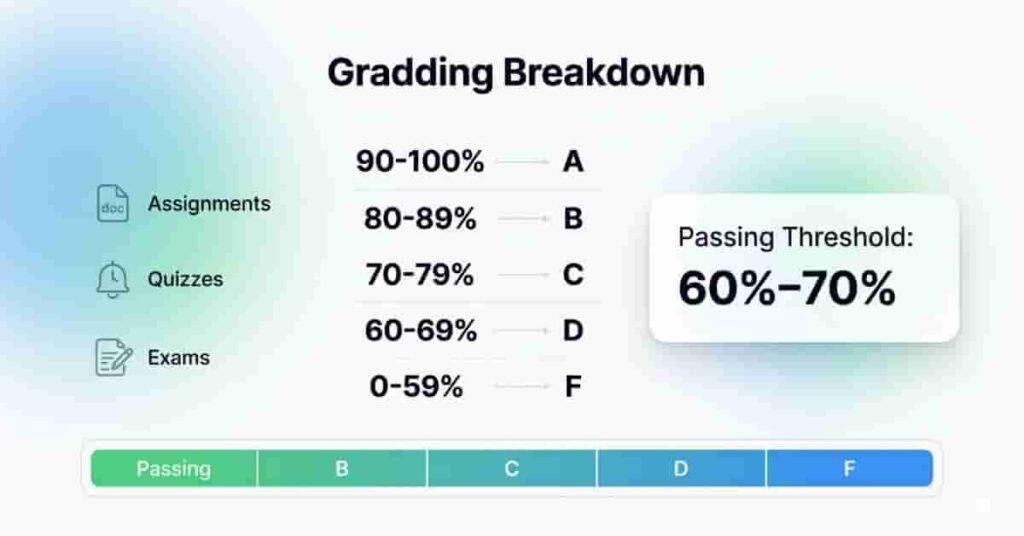
A passing grade in Canvas usually starts at 60%, but this can vary. Some courses require 65% or 70% to pass. Many beginners are surprised by this, especially in U.S. colleges where grading policies differ.
Your passing score depends on your instructor’s setup. Canvas calculates grades but does not set the passing mark. Each teacher defines this threshold based on course difficulty, department rules, or school policy.
Many instructors use grading schemes. These convert percentages into letter grades. For example:
- 90–100% = A
- 80–89% = B
- 70–79% = C
- 60–69% = D
- Below 60% = F
In most cases, a D or higher means you pass. Some programs require a C or higher. Always check your syllabus or the grading scheme in Canvas. This detail can affect your pass/fail outcome.
Understand the difference between letter grades and percentages. Canvas first calculates your percentage, then converts it to a letter grade. If your instructor uses letters, focus on the percentage needed to pass.
Knowing this helps you estimate your final exam score needed to pass. Once you know the target percentage, you can calculate what you need for the remaining assignments or exams. This makes pass/fail decisions clearer and less stressful.
Takeaways
- Most Canvas courses consider 60% as passing, but not always.
- Some instructors require 65% or 70% to pass.
- Canvas calculates grades; instructors define pass thresholds.
- Letter grades come from percentage ranges.
- Check your course grading scheme before calculating your final score.
Will I Pass My Canvas Course? (Quick Answer)
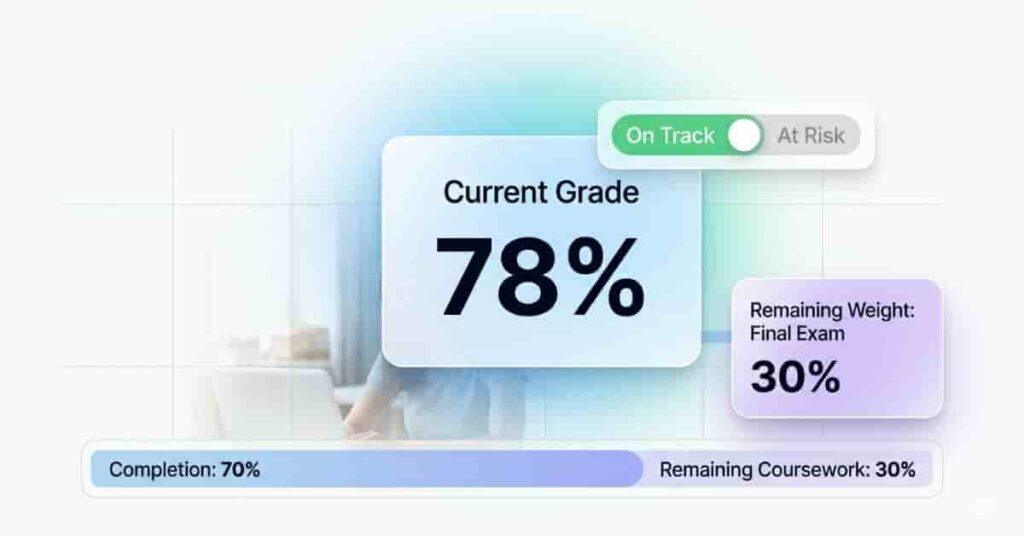
Estimate if you’ll pass Canvas by checking two things: your current grade and the remaining weight, usually from your final exam or assignments. These determine if you pass or fail.
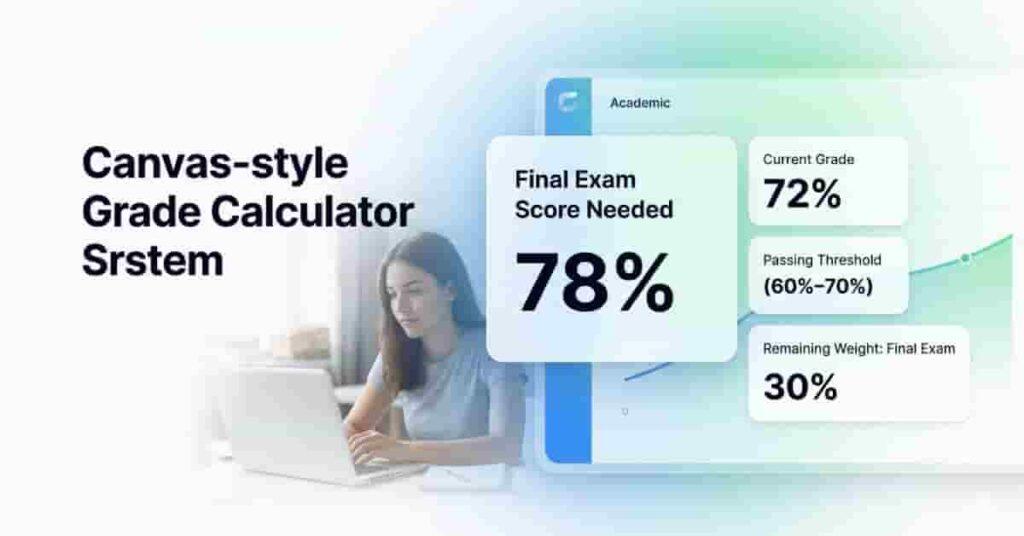
For example, imagine you have 68% so far. Your final exam counts for 30% of the course. Even a moderate score could push you above the passing mark. But if your current grade is lower, you may need a stronger final result.
A simple formula combines your completed coursework and the remaining weight. It shows the final exam score needed to pass. Manual calculations can be confusing due to weighted grades.
Don’t guess. Use a calculator for instant results. A Canvas pass/fail calculator checks your grade, remaining weight, and target. It tells you if you’re on track or at risk.
Use the Pass/Fail Calculator now to find your required score in seconds.
Takeaways
- Your current grade is the starting point.
- Remaining weight often includes the final exam.
- Weighted grading affects your pass chances.
- Manual calculations can be confusing.
- A pass/fail calculator gives a fast, accurate answer.
How to Calculate If You Will Pass (Formula)
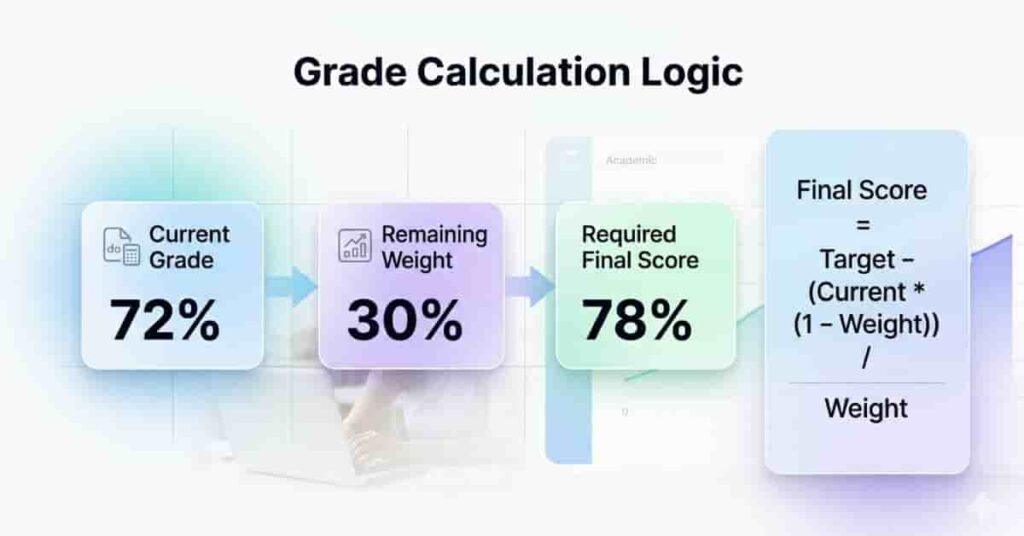
Estimate your pass chances in Canvas by focusing on three things: the remaining weight, your required score, and your target grade. This process stays clear and simple.
Start with your target grade. This is the minimum percentage needed to pass, often 60% or higher. Next, check your current grade from completed assignments. Then look at the remaining weight, usually the final exam or unfinished work. These pieces show how much your future score matters.
Here’s the basic logic: your current grade covers completed work, and the remaining weight fills the rest. If your current grade is below the target, you must score higher on the remaining portion. If your current grade is strong, you may only need an average result. This is why students often search for the final exam score needed to pass.
For example, if your current grade is 70% and 30% remains, the final exam controls a big part of your outcome. A higher required score means more effort is needed. A lower required score means you’re already close to passing.
Many students use a Canvas pass/fail calculator instead of calculating manually. It instantly combines your values and removes guesswork, helping you focus on studying.
Takeaways
- Identify your target passing percentage first.
- Check your current grade in Canvas.
- Look at the remaining weight of your final exam.
- Higher remaining weight increases the required score impact.
- A calculator simplifies the process and saves time.
Real Examples (Pass vs Fail Scenarios)
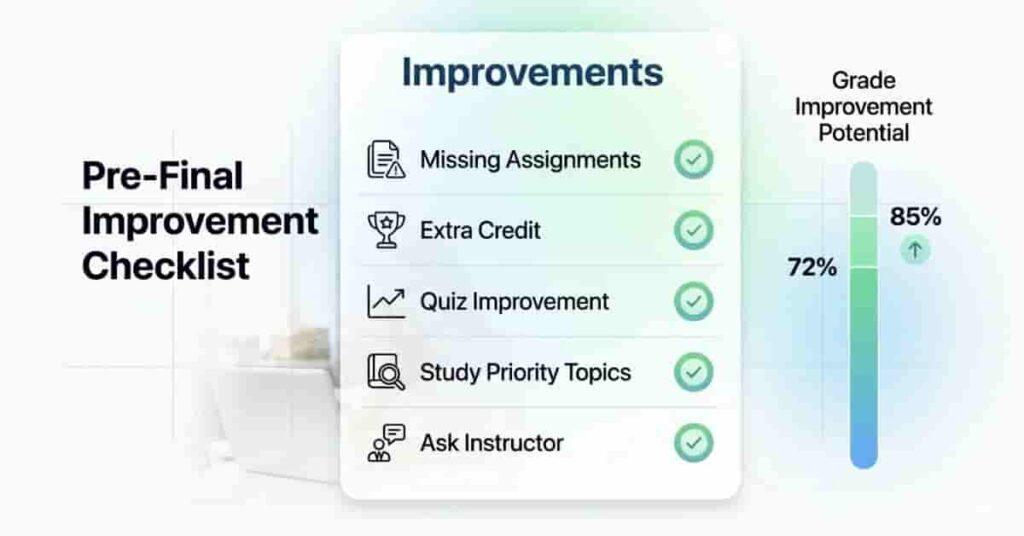
These examples show how your grades affect your pass chances in Canvas. Each scenario uses simple numbers to help you know if you’re safe, borderline, or at risk.
Example 1: Passing Scenario
Current grade: 72%
Final exam weight: 30%
Target pass: 60%
You are well above the passing mark. Even a lower final score can keep you passing. With some flexibility, this situation means less exam pressure.
In most cases, a moderate score keeps your overall grade above 60%. You still should prepare, but you don’t need a perfect result. This is a comfortable passing scenario.
Example 2: Borderline Scenario
Current grade: 58%
Final exam weight: 40%
You are close to the passing threshold. The final exam carries heavy weight. A strong performance can push you above 60%. A weak score may keep you below passing.
In this situation, you may feel unsure. Your required score depends on how much you need to improve. A small boost can make a big difference. Focus on high-impact topics before your exam.
Example 3: Failing Scenario
Current grade: 50%
Final exam weight: 20%
Your current grade is below passing, and the final exam has little weight. Even a high final score may not recover your grade, increasing your risk of failing.
In this situation, check for extra credit or missing assignments. These can improve your total more than the final exam alone. Early action increases your chances.
Takeaways
- High current grades provide flexibility.
- Heavy final exam weight increases recovery chances.
- Borderline grades require focused preparation.
- Low grades with small remaining weight are risky.
- Use examples to estimate your own pass probability.
Remaining Score Needed to Pass
The remaining score needed to pass is the grade required on your final exam. It depends on your current percentage and the remaining weight in Canvas. If your grade is low, you need a higher final score. If it’s high, you may only need an average result.
Many students focus on one simple question: “What do I need on the final?” This helps you set a clear study goal. Instead of guessing, you aim for a specific percentage. Knowing this number also reduces stress before the exam.
Here are common passing targets students use:
Pass with 60%
If your course requires 60% to pass, calculate what you need for that overall grade. If you’re close to 60%, an average final may be enough.
If you already have 65%, you may only need a basic passing score. If you have 55%, you’ll need a stronger result. The closer you are, the easier it is.
Pass with 70%
Some programs require at least 70% to pass. This is common in competitive or core courses. In this case, your required final score increases.
Students below 65% usually need a high final exam score. This makes preparation more important. Focus on high-weight topics and review weak areas first.
Pass with a C Grade
Many schools treat a C grade as passing. A C usually falls between 70% and 79%, depending on the grading scheme. Always confirm your instructor’s scale.
If your goal is a C, calculate the percentage that matches it. Then work backward to find your required final score. This approach gives a clearer target than guessing.
Takeaways
- “Needed on final” means your required exam score.
- Lower current grades increase the required final score.
- 60% is the most common passing target.
- Some courses require 70% or a C grade.
- Set a clear percentage goal before studying.
How to Improve Your Chances Before the Final Exam
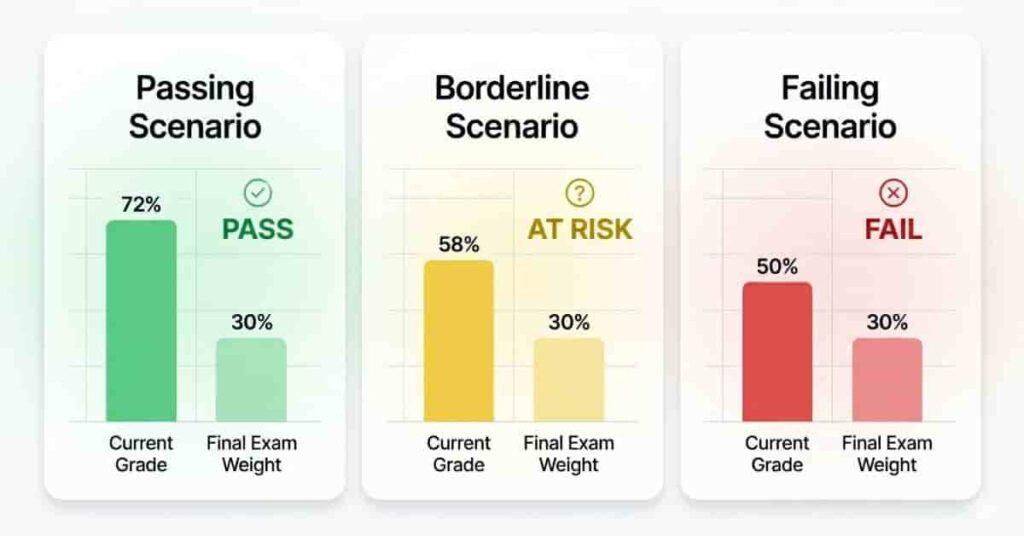
If you are close to failing, you can improve your grade. Focus on quick actions that increase Canvas points before the final. These changes often make a bigger difference than just studying.
Review your gradebook. Look for missing work, low scores, or optional tasks. These offer the fastest improvement. Gaining extra points lowers the score needed on your final.
Here are practical ways to boost your chances:
- Submit missing assignments: Late submissions may still earn partial credit. Check deadlines and upload work quickly.
- Look for extra credit: Some instructors offer bonus points. These can raise your grade without heavy effort.
- Improve quiz scores: Retakes or practice quizzes help increase small but valuable points.
- Study priority topics: Focus on sections with higher exam weight. This improves efficiency.
- Ask your instructor: Clarify grading rules or recovery options. Many teachers suggest helpful strategies.
Act early for more flexibility. Waiting until the final increases pressure. Even minor improvements can change your outcome from failing to passing.
Pro Tips
- Prioritize assignments with the highest point value.
- Set a short study plan for weak topics.
- Track your grade after each improvement step.
Related Calculators That Can Help
If you want a better view of your Canvas grade, these tools help you make faster decisions. Each calculator focuses on a separate part of your progress. Using them together removes guesswork and helps you plan for your final exam.
A Canvas Grade Calculator helps you understand your current overall score. It shows how each assignment affects your total grade. This is useful when you want to see where you stand before the final exam.
A Required Final Grade Calculator tells you what score you need on your final exam. It uses your current grade and remaining weight to calculate your target. This is the best tool when you want a clear pass or fail answer.
A Grade Recovery Calculator helps you see how to improve a low grade. It shows how missing assignments, quizzes, or extra credit can raise your total score. This is helpful if you are close to failing and need quick improvement options.
Together, these tools give you a complete view of your academic situation. You can check your current grade, predict your final requirement, and plan recovery steps in one workflow. This makes studying more focused and less stressful.
Conclusion
Understanding your grade in Canvas becomes much easier when you know how passing scores, formulas, and remaining weights work. This guide explained what a passing grade means, how to estimate your final exam score, and how to check pass or fail scenarios with simple examples. You also learned how small improvements before the final exam can change your result.
The final exam score needed to pass Canvas depends on your current grade and course weight. Instead of guessing, you can now use clear steps or a calculator to get accurate results in seconds. This removes stress and helps you plan smarter.
If this guide helped you, share it with classmates or leave a comment with your experience. You can also explore more grade tools on our website to stay prepared and confident before exams.

We are the Canvas Academic Team, a developer team focused on building simple and practical tools that help students succeed academically. This platform was created specifically for Canvas LMS students to make grade tracking, GPA calculations, exam planning, and academic management easier and more efficient.
Our focus is on creating fast, accurate, and student-friendly educational tools along with helpful learning resources that improve productivity and reduce academic stress.
Through CanvasGradeCalculator.com, our goal is to continue building useful resources that help students study smarter, stay organized, and achieve better academic results.