
Table of Contents
Introduction
Worried your Canvas grade is falling fast? Falling behind can feel overwhelming, especially if it’s your first time navigating online courses. Many students in the USA struggle with missed assignments, low quiz scores, or heavy reliance on the final exam. Without a clear plan, it’s easy to panic.
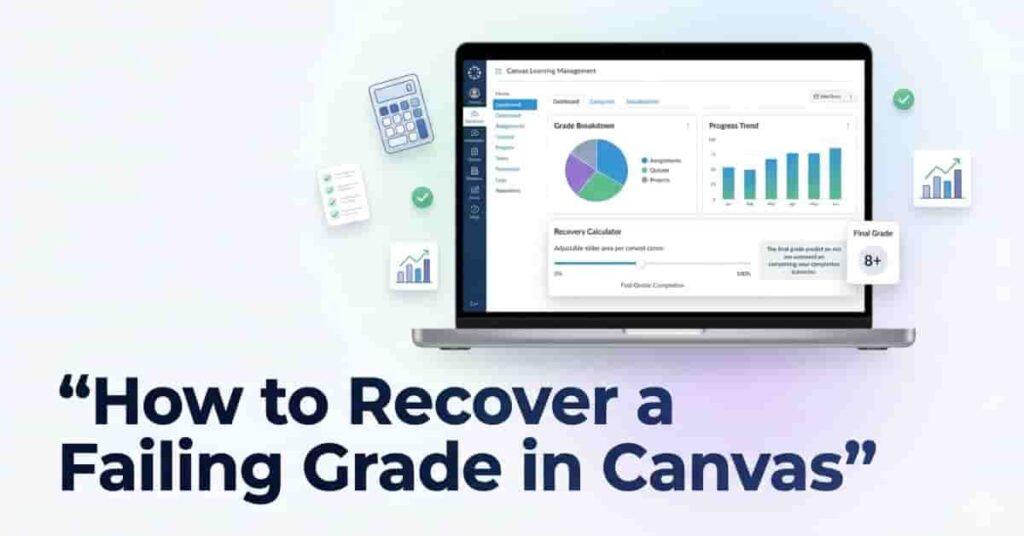
The good news? You can turn things around. In this guide, we’ll show you exactly how to recover a failing grade in Canvas. You’ll learn step-by-step strategies to calculate what you need on remaining assignments, plan your study time efficiently, and use our recovery tools to track your progress and set achievable goals. By the end, you’ll have a practical roadmap to raise your grade and pass your course confidently.
Start your comeback—use our Canvas recovery calculator to get back on track.
Common Reasons Students Fail in Canvas Courses
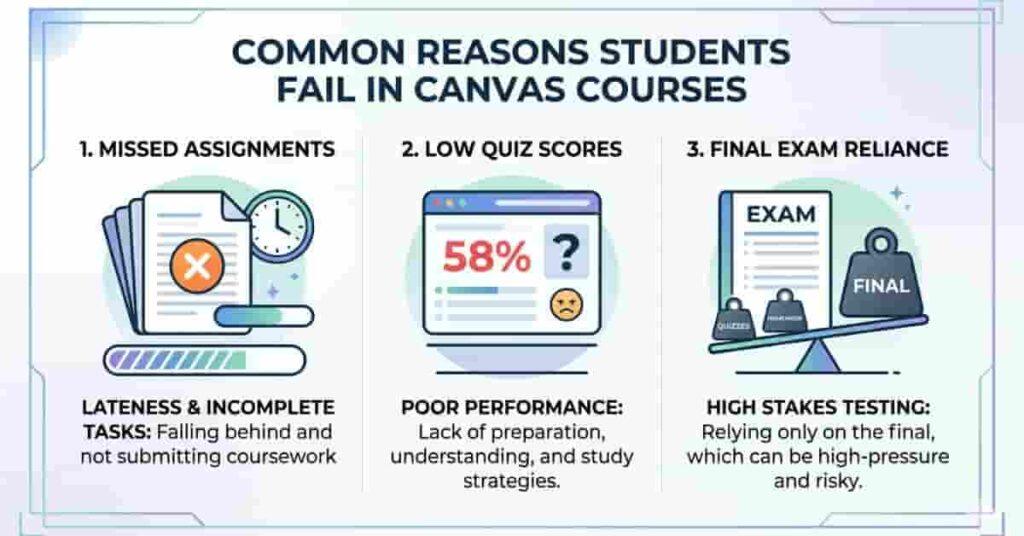
Many students start strong and, with the right strategies, can continue to thrive in Canvas coursework. If you miss an assignment or two, don’t get discouraged—there is still plenty of opportunity to improve. By staying organized and proactive, you can keep your grades on track, even if some assignments are heavily weighted.
If you find yourself earning low quiz or test scores, remember that improvement is possible. Quizzes may make up a sizeable portion of your grade, but each attempt offers a chance to learn and do better next time. Even if the final exam has significant weight, focusing on consistent effort throughout the course can help you succeed.
Staying on top of your grades, managing your time well, and using helpful tools like the Canvas grade tracker or recovery calculator can make a big difference. Recognizing challenges early empowers you to take positive steps. The quicker you spot areas to work on, the more you can set yourself up for a strong finish.
How to Check If You Will Pass Your Canvas Course
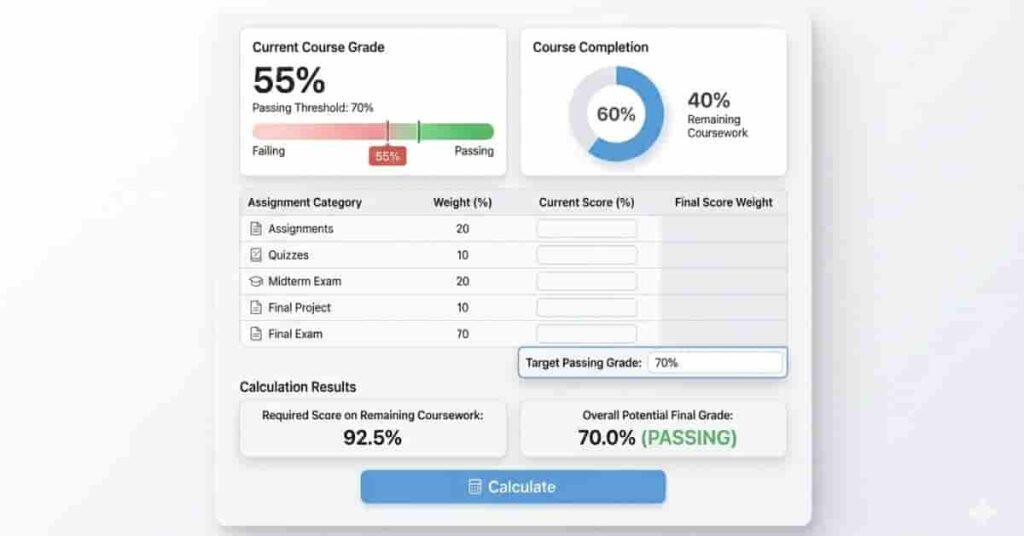
Before starting a recovery plan, check where you stand. Canvas weighs your completed and remaining assignments to calculate your grade. For example, if you have 55% with 40% of the course left, find out what scores you need to pass.
Here’s a simple way to check: first, list all remaining assignments and their weights. Then, calculate the minimum scores needed to reach 60% or your course’s passing threshold. This helps you see whether recovery is easy, borderline, or critical. Using a Canvas pass/fail calculator makes this step much faster. Simply enter your current grade, remaining weight, and desired passing grade, and the tool tells you exactly what you need on each assignment.
Planning this early prevents surprises on your final exam and helps focus your time on high-impact tasks. Don’t guess—track your progress accurately with our recovery calculator today.
Step-by-Step Recovery Plan
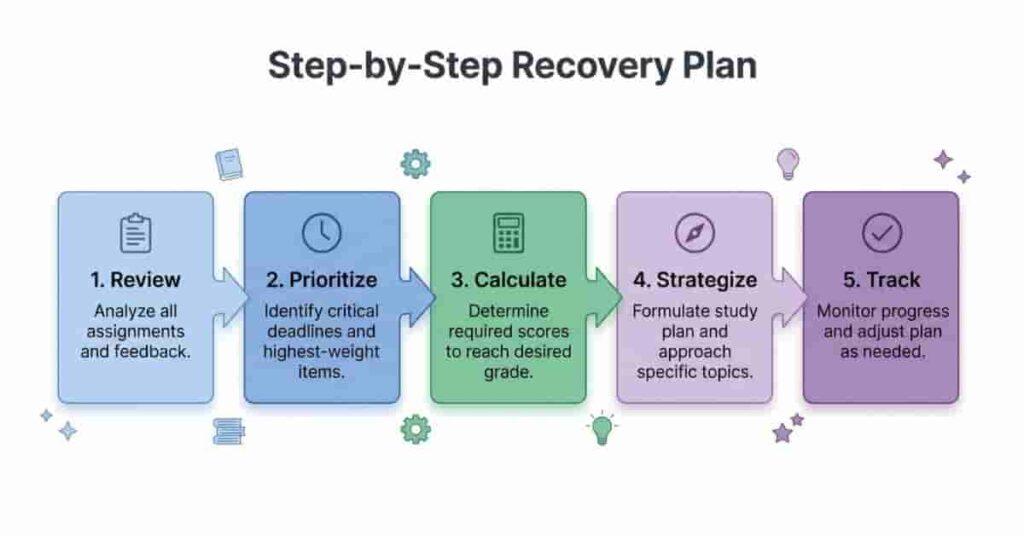
Recovering your Canvas grade may seem daunting, but a structured approach makes it manageable. Begin by reviewing all graded assignments and recording your current standing. This provides a clear snapshot of your status and pinpoints which areas require the most attention.
Then, identify the highest-weight remaining assignments. These will most affect your grade, so prioritize them in your study plan. Once identified, calculate the exact score needed on each to pass. A Canvas pass/fail calculator streamlines this, revealing the target for every task.
Next, allocate your time and energy strategically. Address your weakest areas first, but secure straightforward points from easier assignments. Track your progress consistently and adjust as necessary. If a final exam approaches, focus preparation on the most impactful topics to optimize grade recovery.
By following these steps in sequence, you turn uncertainty into a clear, actionable plan.
Scenarios – Easy vs Borderline vs Critical Recovery
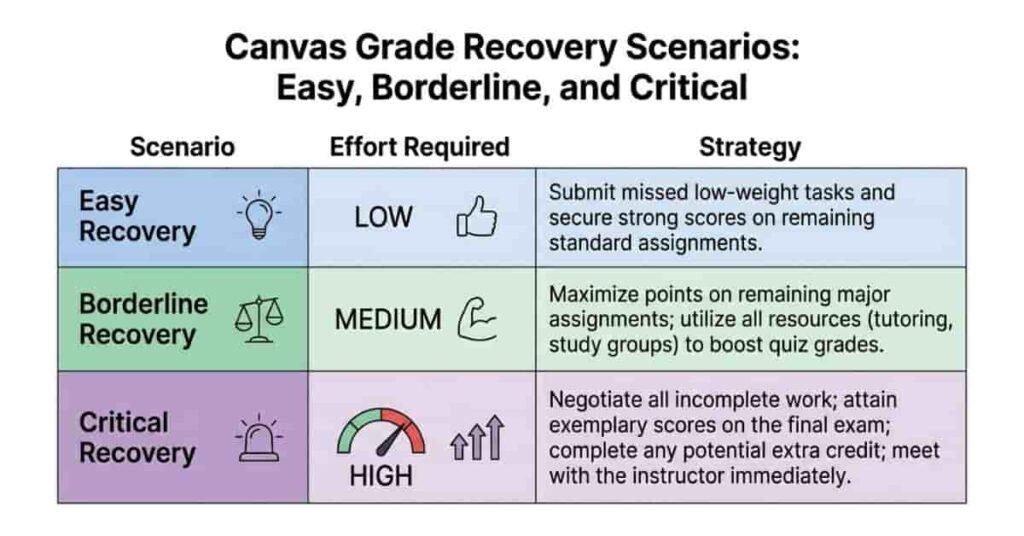
Not every failing grade is the same. Understanding your recovery scenario helps you focus your efforts effectively.
First is Easy Recovery: If most assignments are complete and only a few low-weight tasks remain, your grade can rebound with minimal effort. Focus on finishing these remaining tasks and celebrate your consistent progress—you’re on the right track!
In contrast, Borderline Recovery occurs when your remaining assignments carry high weight. You’ll need strong scores on these to pass. Prioritize high-impact tasks first, use targeted study strategies, and track your progress with a Canvas recovery calculator to avoid surprises.
Finally, Critical Recovery describes the situation when required scores exceed 100%, which isn’t possible. In these cases, passing the course through normal assignments may not be realistic. Explore options like extra credit, contacting your instructor, or considering course retake strategies. Recognizing a critical scenario early gives you time to plan alternative solutions.
Tips to Maximize Your Recovery Chances
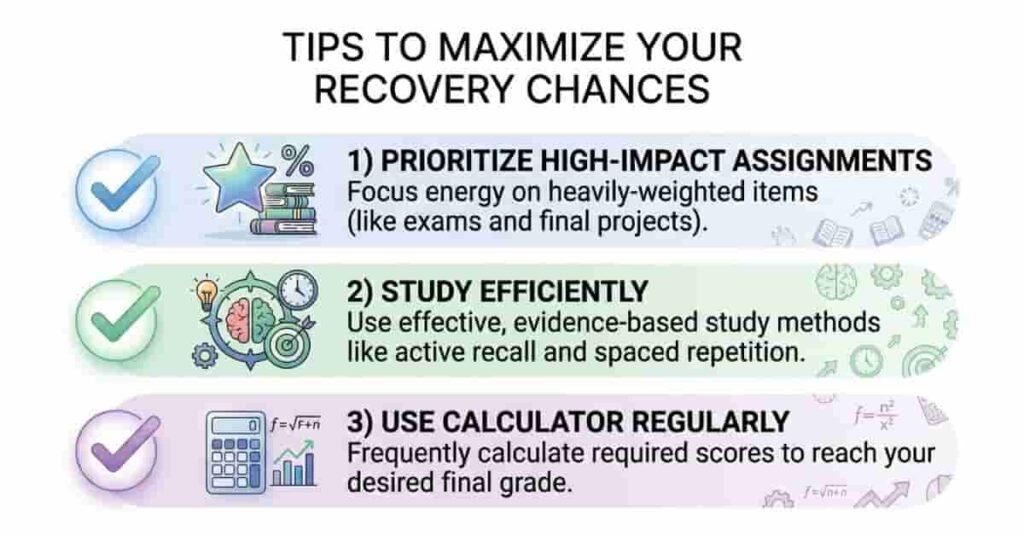
Boosting your Canvas grade isn’t just about hard work—it’s about working smart and believing you can improve. Prioritize high-impact assignments that affect your grade most, and channel your energy here first. Each successful completion moves you closer to your goals.
Next, study with determination and focus. Break sessions into short, focused periods, tackling weak areas first. Use active learning techniques: practice quizzes, flashcards, or teach the material to someone else. Stay confident and avoid spending too much time on low-impact assignments—they won’t move your grade much.
Finally, take charge of your progress with the Canvas recovery calculator. Enter updated grades after each assignment to track your achievements and refine your plan. This habit keeps you informed, motivated, and confidently steering your recovery journey. Remember, small, consistent actions now will lead to big results!
conclusion
In this guide, we covered how to recover a failing grade in Canvas, including common pitfalls, step-by-step strategies, and scenario-based planning. You learned how to calculate the scores needed on remaining assignments, prioritize high-impact tasks, and use the Canvas recovery calculator to track progress.
Remember, even if your current grade feels low, a structured plan and consistent effort can turn things around. Focus on weak areas, manage your time efficiently, and monitor your progress regularly to stay on track.
Take action now—use the recovery calculator and share your tips below!

We are the Canvas Academic Team, a developer team focused on building simple and practical tools that help students succeed academically. This platform was created specifically for Canvas LMS students to make grade tracking, GPA calculations, exam planning, and academic management easier and more efficient.
Our focus is on creating fast, accurate, and student-friendly educational tools along with helpful learning resources that improve productivity and reduce academic stress.
Through CanvasGradeCalculator.com, our goal is to continue building useful resources that help students study smarter, stay organized, and achieve better academic results.