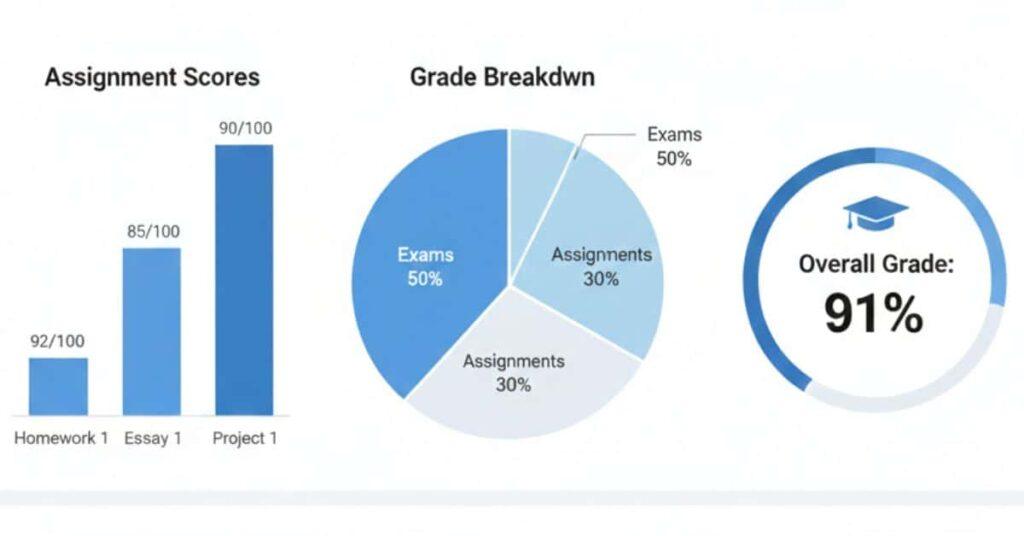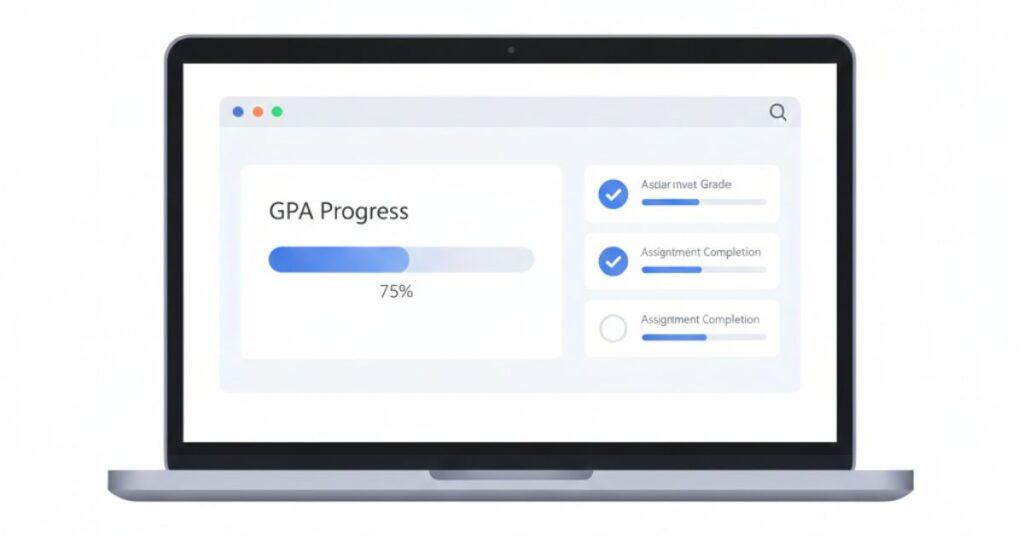


Introduction
Ever wondered how close you are to hitting that A in your class? Many students struggle to accurately track their grades, especially when juggling multiple assignments and exams. That’s where the Canvas grade calculator comes in handy.
Learning how to use the Canvas Grade Calculator can save time, reduce stress, and give you a clear picture of your academic progress. For beginners in the USA, understanding this tool means you can plan your study sessions smarter and avoid last-minute surprises.
In this article, you’ll get a full Canvas grade calculator tutorial, showing each step in a step-by-step Canvas grade calculation. We’ll also cover common mistakes using Canvas calculator tools so you don’t fall into the usual traps. By the end, you’ll confidently predict your course grades and make informed decisions about your assignments and exams. Whether you’re tracking your GPA, preparing for finals, or just curious about your performance, this guide will make your grade calculation simple, fast, and stress-free.
Why Use the Canvas Grade Calculator?
Understanding how to use the Canvas Grade Calculator is easier when you know why it matters. This tool saves time, reduces stress, and gives a clear picture of your academic progress. Instead of guessing or manually calculating, you can quickly see your standing and plan better. Here’s how to apply this effectively.
👉 Try the Canvas Grade Calculator now and see your real results in seconds.
Quick Overview of Its Benefits (Accuracy, Saves Time, Stress-Free Tracking)
The Canvas grade calculator tutorial helps students and teachers track performance without extra math. Accuracy is one of its biggest strengths. By entering scores correctly, you avoid mistakes that often happen with manual calculations.
Some clear benefits include:
- Accuracy: Get instant, error-free results.
- Saves time: No spreadsheets or formulas needed.
- Stress-free: Focus on improvement, not calculations.
With this step-by-step Canvas grade calculation, students can see real results in seconds. The tool works as a quick Canvas calculator guide, offering a clear overview of progress. It helps to set goals and handle your workload with less hassle.
When to Use: Before Exams, While Planning GPA, Checking Final Scores
Knowing when to use the calculator is essential. Students often wait until the semester ends, but that limits its usefulness. You can check grades in the Canvas calculator at different times for better planning.
- Before exams: Predict how upcoming scores affect your grade.
- While planning GPA: enter course weights and track overall standing.
- For final scores: See exact outcomes with “what-if” scenarios.
This helps you avoid common pitfalls when utilizing Canvas calculator tools, ensuring that your progress tracking stays on track and efficient! Regular use provides a more precise roadmap for achieving GPA goals and maintaining confidence throughout the term.
Real-Life Experience: Don’t wait until finals week to open the Canvas grade calculator. Use it after every big assignment or quiz. This way, you’ll spot grade shifts early and know exactly how much effort to put into the next task. It’s a simple habit that keeps you in control throughout the entire semester.
Many students first need to check grades on Canvas accurately before using any calculator to predict results. If you’re unsure where your scores appear, learning how to check grades on Canvas helps you enter correct data into the calculator.
Step-by-Step Guide to Using the Canvas Grade Calculator
When learning how to use the Canvas Grade Calculator, a straightforward process helps avoid confusion. This tool works best when you follow each step carefully. A structured walkthrough ensures accuracy, prevents errors, and gives you the most reliable results. Here’s how to apply this effectively:
Step 1 – Open the Calculator
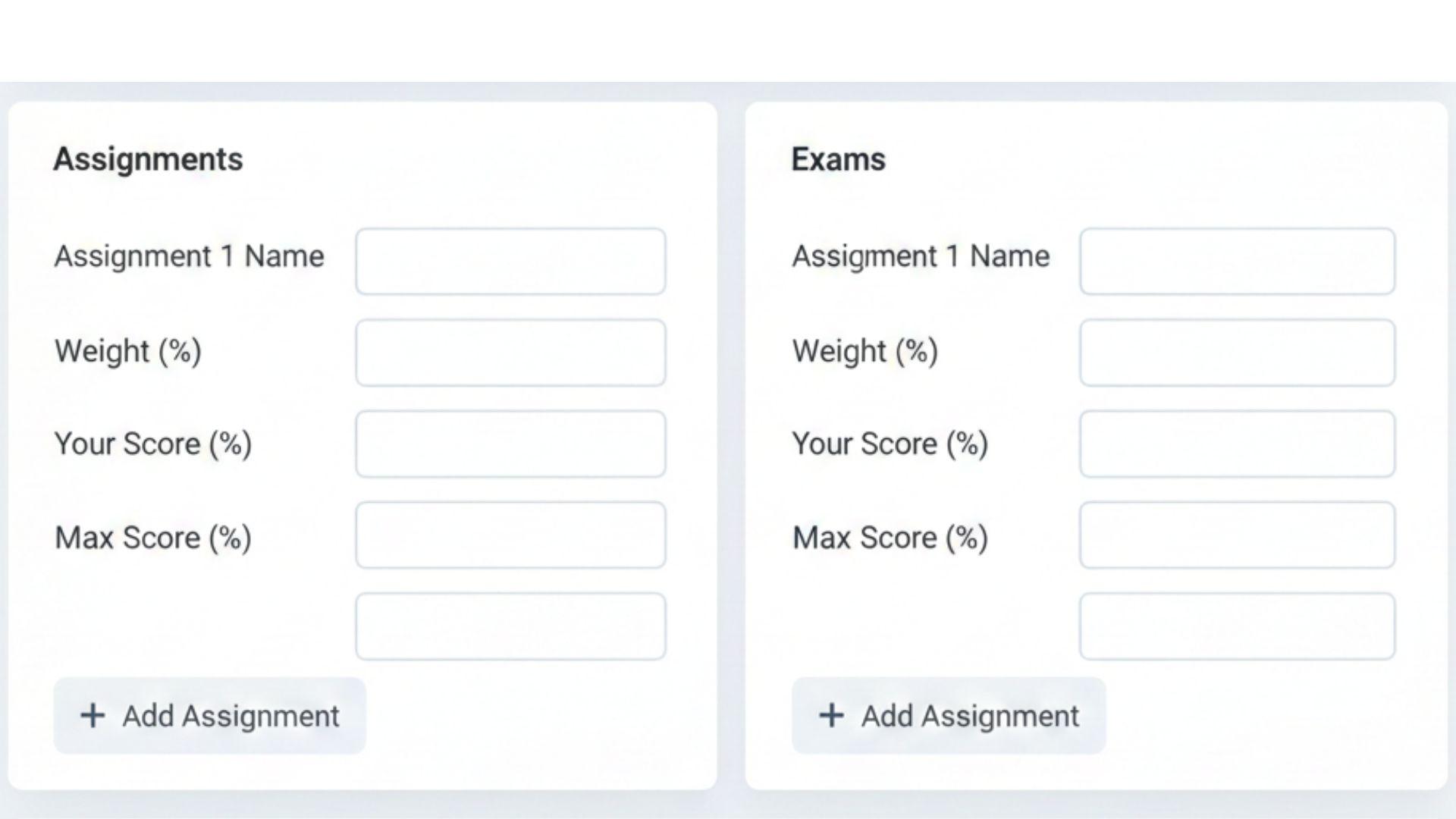
Start by navigating to the Canvas grade calculator page. The best part is that no login or signup is required. Simply open the tool in your browser, and you’re ready.
This simplicity makes the Canvas calculator guide accessible to anyone. You don’t need special software or extra steps. Just visit the site and prepare to enter your details.
Step 2 – Enter Your Assignment/Exam Details
Now add your assignments, quizzes, or exams. Each entry needs:
Input:
Assignment 1 → Score: 20 | Weight: 30
Quiz → Score: 78 | Weight: 20
Midterm → Score: 85 | Weight: 0 (leave blank for now)
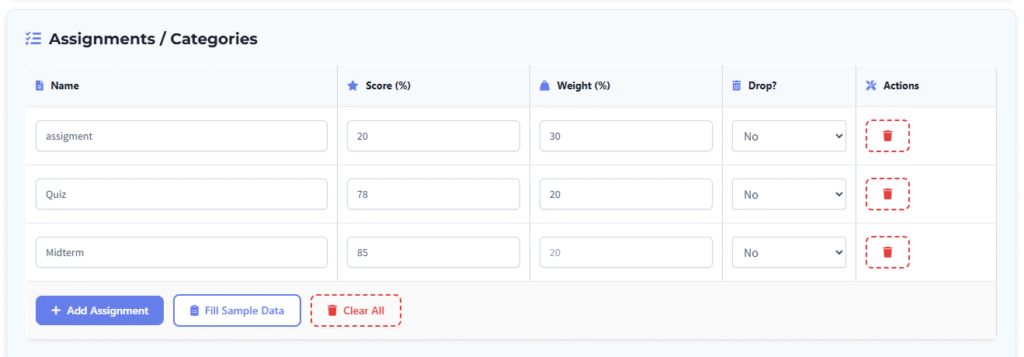
For example: Homework 1 = 20/25. Entering details correctly ensures accuracy in your step-by-step Canvas grade calculation. Mistakes here can lead to incorrect results, so always double-check inputs.
Step 3 – Add Weights (If Applicable)
Some classes use weighted grading systems. Others keep it simple with total points.
Input:
Homework → 30%
Midterm → 20%
Final Exam Weight (Course Setup box) → 50%
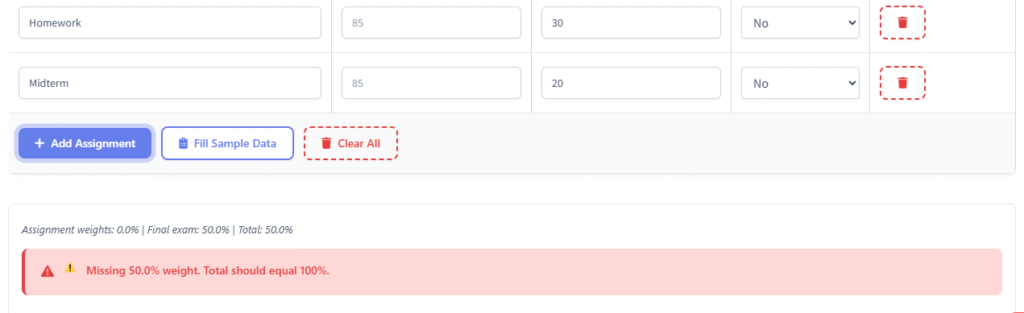
The calculator lets you handle both. Match your entries with your Canvas course settings to avoid common mistakes using Canvas calculator tools.
Step 4 – Check Your Current Grade
Once details are entered, the calculator automatically shows your grade. You’ll see both percentage and letter grade.
Same as above (Assignments + Weights)

This quick result makes it easy to check grades in the Canvas calculator without doing manual math. It’s a stress-free way to know exactly where you stand.
Step 5 – Calculate “What If” Scenarios
The Canvas grade calculator tutorial also lets you test future outcomes. For example: “If I score 80% on the final, my course grade will be 85% (B).”
- Input:
Desired Overall Grade (%) = 90
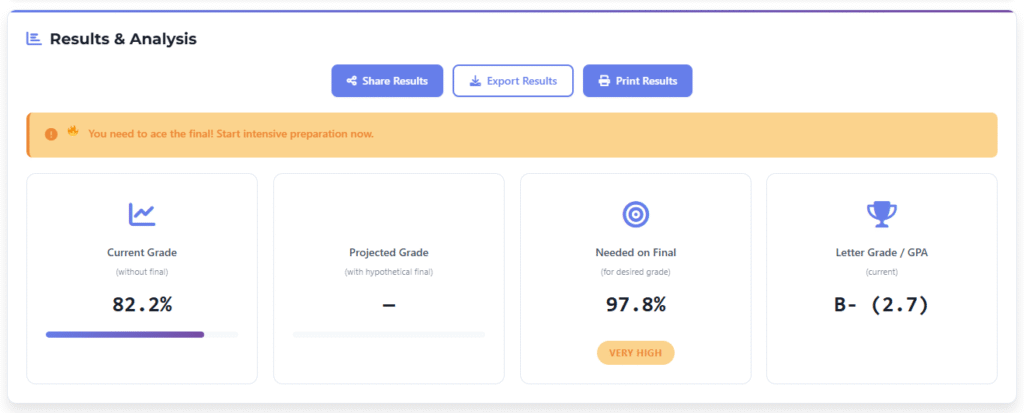
This feature is powerful for planning. You can set goals, predict results, and understand what scores are needed to reach a target GPA.
🎯 Test your own ‘what-if’ scenarios instantly with the Canvas Grade Calculator — click here to try.
Common Mistakes When Using the Canvas Calculator (and How to Fix Them)
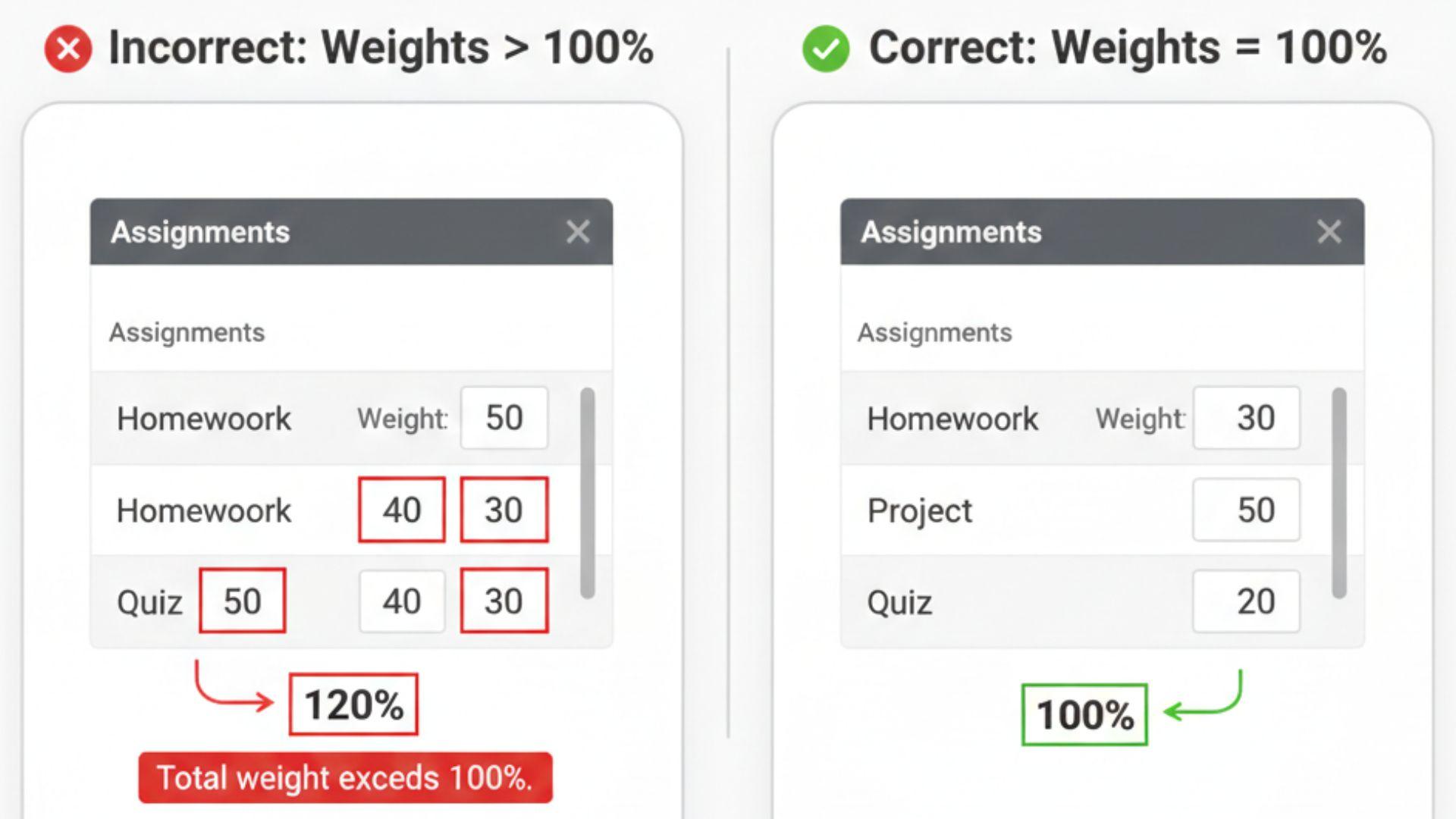
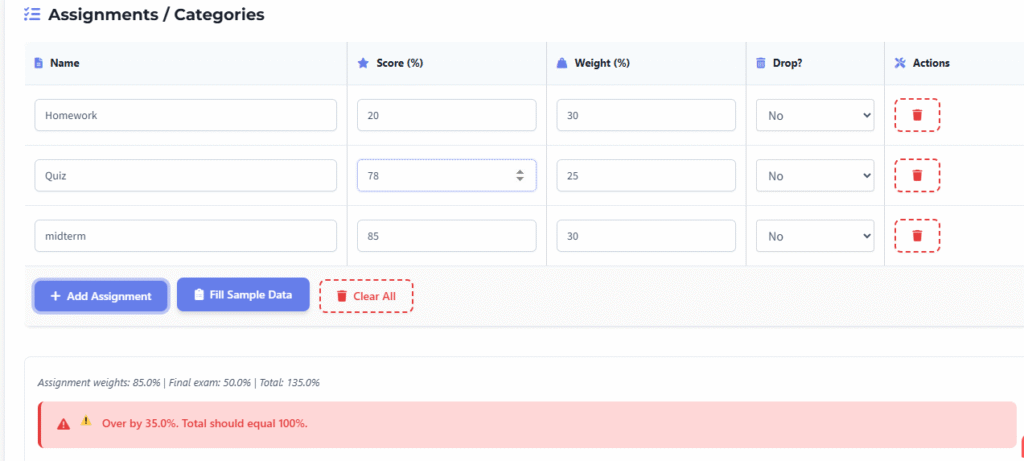
When learning how to use the Canvas Grade Calculator, accuracy depends on how well you enter your details. Many students face issues due to minor errors that can alter the results. By knowing these common mistakes, you can avoid confusion and get reliable outcomes. Here’s how to apply this effectively:
Mistakes:
- Input:
- Homework → 30%
- Quiz → 25%
- Midterm → 30%
Final Exam → 50%
Fix :
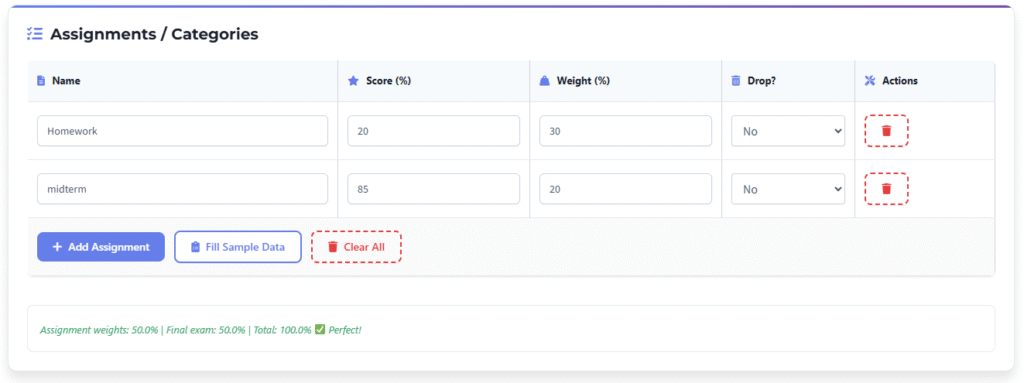
- Input (Corrected):
- Homework → 30%
- Midterm → 20%
- Final Exam → 50%
Forgetting to Add Weights
One of the most common mistakes in using Canvas calculator tools is skipping weights. If your course uses a weighted system, leaving weights blank will yield incorrect results. For example, treating a final exam (50%) the same as a quiz (5%) changes everything.
Fix: Always check your syllabus and match the weight system in the Canvas calculator guide. This helps to ensure that your grades accurately represent the actual structure of the course.
Mixing Total Points with Percentages
Students sometimes enter raw points in one place and percentages in another. This can make things a bit confusing when calculating grades step by step on Canvas. For example, typing 85 instead of 85/100 skews the result.
Fix: Stay consistent. Either use points earned/points possible or percentages across all entries.
Not Entering All Assignments → Incomplete Grade
Another mistake is leaving out smaller assignments. Even missing participation or quizzes lowers accuracy. The Canvas grade calculator tutorial only works if every graded task is included.
Fix: Double-check your Canvas gradebook. Enter all assignments, big or small, to see your real standing.
Confusing Graded vs Ungraded Tasks
Sometimes students count future tasks that haven’t been graded yet. Just a heads up: checking grades in the Canvas calculator might throw you off a bit and give you the wrong idea!
Fix: Separate completed work from “what-if” scenarios. Only enter graded tasks in the main section. Use future entries only when testing outcomes.
Real-Life Experience: Always enter grades the same way—either all as percentages or all as points. I once mixed “85” as a raw score with “92%” in the same list, and the calculator gave me a wrong final grade. Staying consistent saves you from that headache.
How It Worked in Real Life: A student entered only their midterm and final exam into the Canvas grade calculator, leaving out smaller homework grades. The result showed a much lower average than expected, which caused unnecessary stress. Once they added all assignments—including quizzes and participation—their true grade was a solid B, not a C.
Tips for Accurate Results
When exploring how to use the Canvas Grade Calculator, accuracy is the key. Even a small mistake can shift your percentage or letter grade. By following a few simple practices, you can get results that match your actual Canvas gradebook. Here’s how to apply this effectively:
Always Double-Check Assignment Weights in Canvas
Many students forget that different assignments carry different weights. A final exam may account for 40%, while homework counts for only 10%. If weights are missing or incorrect, the Canvas calculator guide will show the wrong grade.
Tip:
- Review your syllabus before entering scores.
- Match weights exactly with your Canvas course settings.
- Ensure the total equals 100%.
This step ensures your step-by-step Canvas grade calculation reflects reality, not guesswork.
Include Dropped Grades if Your Instructor Uses Them
Some instructors allow the lowest quiz or assignment to be dropped. If you ignore this rule, your overall grade may look lower than it is.
Tip:
- Check if your course drops the lowest scores.
- Adjust entries in the Canvas grade calculator tutorial.
- Remove that task from your calculation for accuracy.
This prevents common mistakes when using Canvas calculator tools and ensures your results align with course policies.
Compare with Canvas’s Own Gradebook for Confirmation
The best way to check grades in the Canvas calculator is by comparing them with your actual Canvas gradebook. If numbers don’t match, you may have entered details incorrectly.
Tip:
- After entering all scores, cross-check with Canvas.
- Look for missing assignments or misapplied weights.
- Correct errors immediately for an accurate result.
This simple habit helps you avoid stress and gives you complete confidence in your Canvas grade calculator results.
My Experience: Always remember to cross-check the calculator’s result immediately with your Canvas gradebook. If you notice even a slight difference, make sure to recheck your missed weights and assignments. Catching this small mistake can save you from bigger ones later.
For courses that use percentages, understanding a Canvas weighted score calculator can make grade tracking much clearer. If your syllabus relies on weighted grading, a Canvas weighted score calculator helps you see how each category affects your final result.
Conclusion
In this guide, we covered how to use the Canvas Grade Calculator step by step. You learned to enter assignments, apply weights, check current grades, and run “what-if” scenarios. We also highlighted common mistakes when using Canvas calculator tools and provided tips for achieving accurate results.
Using this Canvas grade calculator tutorial, you can now predict your grades confidently and plan your study time effectively. Following a step-by-step Canvas grade calculation ensures you avoid errors and stay on top of your coursework.
Now it’s your turn: try the calculator with your own grades and see how close you are to your goals. Share your experience or tips in the comments, and help other beginners make the most of this simple, stress-free tool.
✅ “Ready to calculate your grades? Use the free Canvas Grade Calculator now and take control of your results today.”
 FAQs :

We are the Canvas Academic Team, a developer team focused on building simple and practical tools that help students succeed academically. This platform was created specifically for Canvas LMS students to make grade tracking, GPA calculations, exam planning, and academic management easier and more efficient.
Our focus is on creating fast, accurate, and student-friendly educational tools along with helpful learning resources that improve productivity and reduce academic stress.
Through CanvasGradeCalculator.com, our goal is to continue building useful resources that help students study smarter, stay organized, and achieve better academic results.