
Table of Contents
Introduction
Ever wonder how close you really are to your next letter grade? Many students guess their scores and end up surprised at the end of the semester. For beginners navigating Canvas, tracking grades accurately can feel confusing, especially when juggling multiple assignments and exams.
The Canvas Boundary Calculator makes this process simple and stress-free. With this tool, you can see your current letter grade, understand exact grade boundaries, and predict your final score. It also helps plan improvements for assignments or exams that carry the most weight. Beginners will appreciate how easy it is to visualize scores and track progress.
By the end of this guide, you’ll know exactly how to use the Canvas Boundary Calculator to monitor your grades, spot opportunities to boost your scores, and confidently plan for finals. Whether aiming for higher grades or simply wanting peace of mind, this tool turns confusion into clarity.
Why You Need a Canvas Grading Calculator
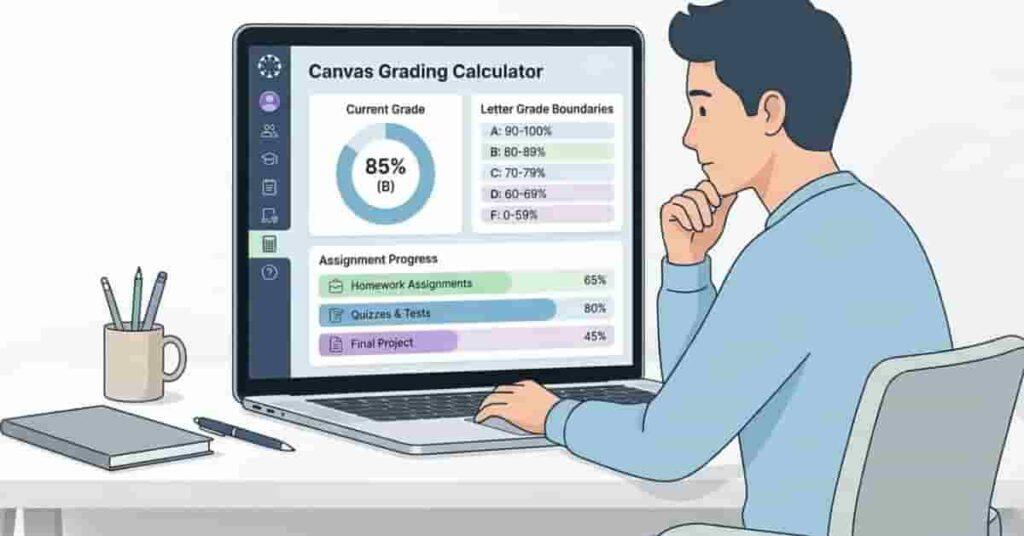
Keeping track of grades can be stressful. Many students in the USA guess their standing and end up surprised at semester’s end. The Canvas Grade Calculator gives you quick insight into your current performance so you can plan smarter and stay confident.
Understand Your Current Standing Quickly
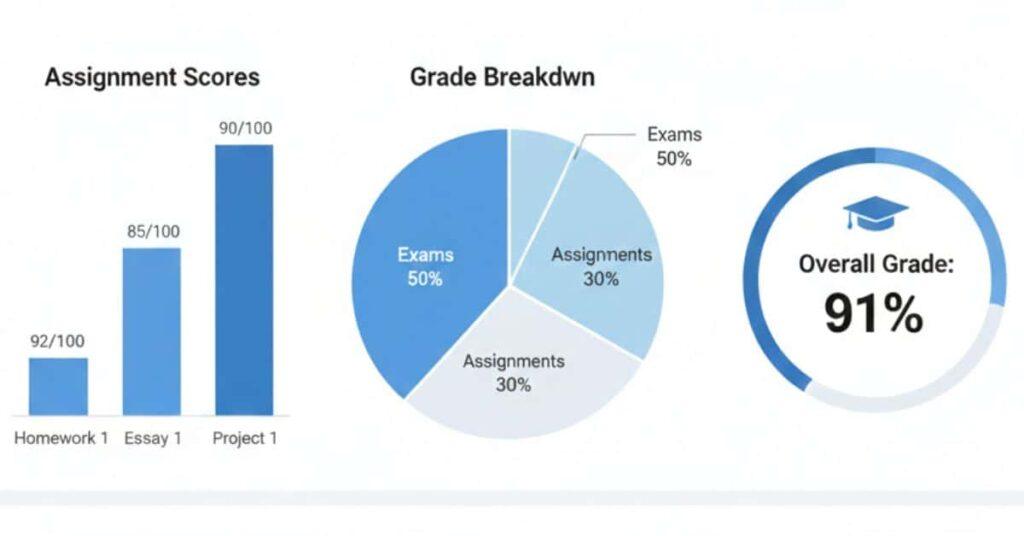
Stop guessing your grade. Enter your assignment percentages, and the calculator instantly shows your letter grade. See exactly how close you are to the next grade level. Use this snapshot to decide which homework to prioritize or how to prepare for a midterm. Beginners see results immediately, with no confusion or complicated formulas.
Visualize Letter Grade Cutoffs
The calculator shows your grade and breaks down the threshold for each letter grade. For example, see the difference between a B+ and an A-. Know these cutoffs to set practical goals and focus on high-value assignments. Turn percentages into actionable targets.
Plan for Improvement Before Final Exams
Assignment and final exam weights are built in. Test different scenarios: raise one test score or submit late assignments on time to see their impact. Plan ahead, focus on important tasks, and maximize your chance to improve before the semester’s end.
How the Canvas Grading Calculator Works
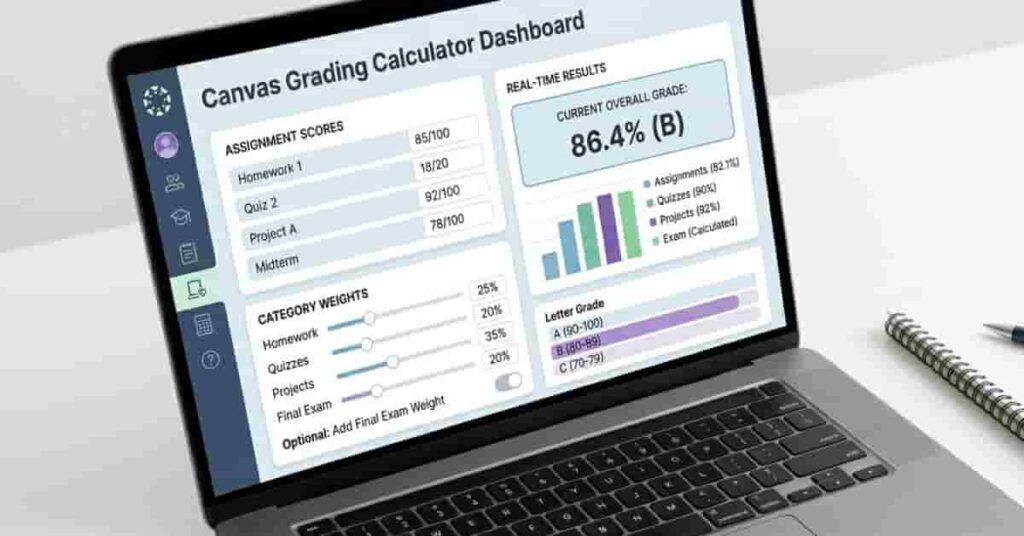
Using the Canvas Grade Calculator is simple, even for beginners. It helps you turn assignment scores into accurate letter grades without complicated math. Enter your grades and course weights to instantly see your current standing. You can then plan how to improve. This saves time, reduces stress, and gives you a clear picture of your progress throughout the semester.
Enter Your Current Scores & Category Weights
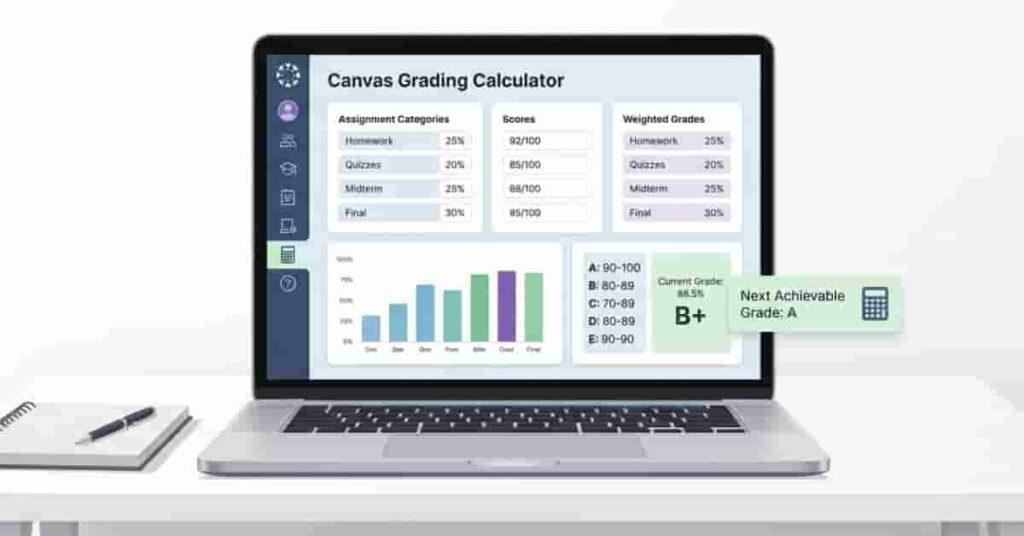
Start by adding scores for homework, quizzes, midterms, and any other graded activities. Include the weight each category carries in your course. The calculator uses these percentages to figure out your overall grade. Beginners benefit because it clearly shows which scores most influence your grade. You’ll see exactly how each category affects your letter grade. This clarity lets you strategically direct your study efforts for the biggest impact.
Include Final Exam Weight (Optional)
If your class includes a final exam or a major project, enter its weight as well. This step allows the calculator to generate a weighted overall score, helping you see where you stand in the class. By testing hypothetical scores for big assignments, you can clearly understand how your performance on these can raise or lower your final grade.
Generate Your Weighted Overall Grade
Once you enter all scores and weights, the calculator generates your weighted grade and shows its corresponding letter grade. By seeing both, you’ll know your exact standing and how many points are needed to reach the next letter grade. This helps students plan targeted improvements before major exams.
Canvas Grading Scales & Grade Boundaries Explained
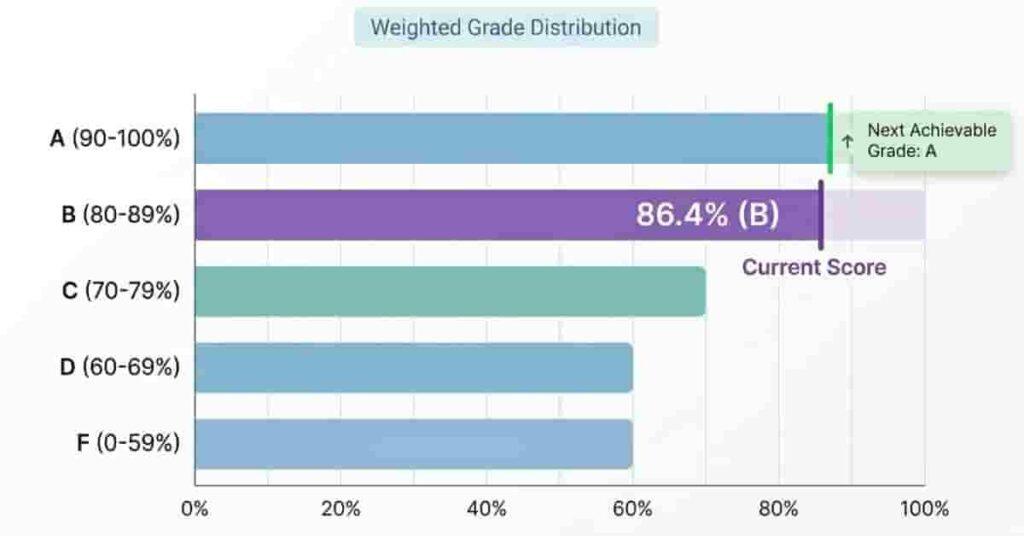
Understanding how Canvas calculates grades is essential for monitoring your progress. Many new users in the USA struggle to see how percentages convert to letter grades. The Canvas Grade Calculator addresses this by displaying both your current score and its placement within the grading scale. Recognizing these scales and boundaries lets you target efforts where they will have the greatest impact on your final grade.
Standard Letter Grades in Canvas (A, B, C…)
Canvas applies standard letter-grade thresholds to convert percentages into grades. An A is typically 93–100%, a B is 83–92%, a C is 73–82%, a D is 63–72%, and an F is below 63%. These bands can differ by course, but knowing the usual breakdown helps you set clear goals. Seeing your percentage next to these thresholds shows you exactly what’s required for each grade.
Understanding Canvas Grade Boundaries
Grade boundaries serve as markers. They reveal how even minor changes in your scores can alter your letter grade. For instance, improving an assignment by a few points could shift you from a B- to a B. Using the Canvas Grade Calculator to track these boundaries lets you plan focused improvements instead of guessing.
Canvas Grading Schemes vs. Canvas Grading System
It’s crucial to distinguish between a grading scheme and the broader Canvas grading system. Grading schemes are course-level rules that determine how scores are converted to letter grades. The Canvas grading system is the overarching structure that applies these schemes uniformly. Knowing both enables you to interpret your results accurately and avoid unexpected outcomes at semester’s end.
Canvas Grade Scale Chart
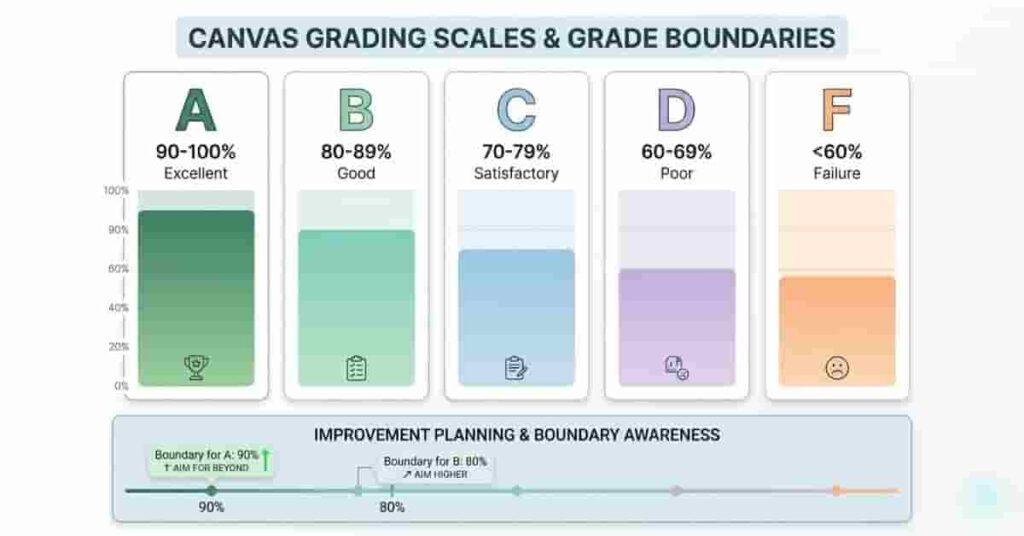
Seeing your grades visually makes understanding performance much easier. Many students struggle to know how their percentage converts to a letter grade. The Canvas Grade Calculator turns numbers into a clear, color-coded chart, letting you quickly see your standing and what’s needed for the next grade. Visual charts are especially helpful for beginners aiming to improve without confusion.
Visual Representation of Score Ranges
A grade scale chart shows your current percentage and how it fits within each letter grade range. For example, if you have an 88%, you can instantly see that you are in the B+ range, close to an A-. These charts often use horizontal or vertical colored bars, segmented to show each grade boundary and labeled with the specific percentage breaks. By comparing your score to each range, you can prioritize assignments and exams that will have the biggest impact on your final grade.
Identify the Next Grade You’re Close To
The chart also highlights opportunities to improve. You can see if raising a quiz or assignment by a few points could move you up a grade range. This visual insight focuses your efforts and helps you plan for important tests or projects, making improvement feel manageable.
Tips to Improve Your Canvas Grade
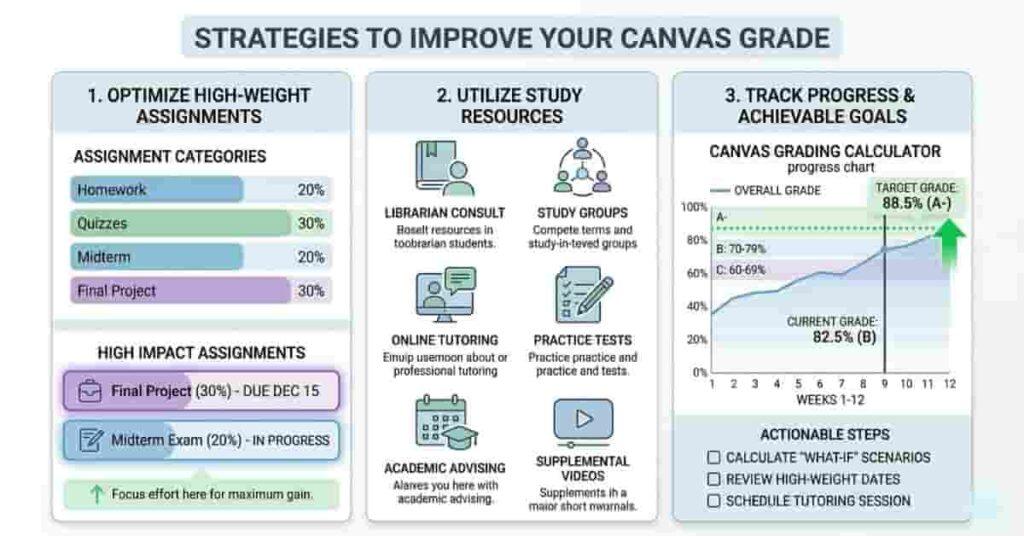
Improving your grades doesn’t have to be overwhelming. With smart, small changes, you can make a big impact. The Canvas Grade Calculator helps you identify key areas to focus on, allowing you to strategically boost your performance. These tips provide practical, actionable steps for beginners in the USA to improve before finals.
Focus on High-Weight Assignments
Not all assignments have the same impact. Prioritize those with higher weight, like midterms, projects, or finals. Even modest improvements on these can boost your letter grade. The Canvas Grade Calculator shows which assignments matter most, letting you focus effort where it counts instead of on low-impact tasks.
Utilize Office Hours & Resources
Instructors and class materials are useful for improving weak spots. Go to office hours to ask questions or get help with hard topics. Look over class notes, study guides, and practice quizzes to get better at the material. Using these helps you study better and can raise your grade.
Track Progress with the Calculator
Regularly entering your grades in the Canvas Grade Calculator helps you see your progress and change your plan if needed. You can try out possible grades to see how more effort changes your final score. To view your grades across all classes, use the Canvas GPA Calculator. Tracking your grades this way keeps you focused and makes sure there are no surprises at the end of the semester.
Conclusion
This guide showed you how to use the Canvas Boundary Calculator to track scores, set grade boundaries, and predict final grades. You learned to enter scores, weigh assignments, and plan improvements. By visualizing cutoffs and trying what-if scenarios, you can better manage your progress and make smart decisions before exams.
The Canvas Boundary Calculator is a simple, powerful tool for students who want clarity in their grades. Regularly updating your scores keeps you aware of your performance and helps you find ways to improve.
Try the calculator today to take control of your academic future. Share your experience in the comments, connect with other students, and explore our resources to master every aspect of Canvas grading.

Hi, I’m Zohaib Ali, a BS-IT student at the University of Engineering and Technology. 🎓 I created CanvasGradeCalculator.com to make grade and GPA calculations simple, accurate, and stress-free for students, teachers, and parents. Passionate about tech and education, Helping learners plan smarter, study better.