
Introduction
Ever checked Canvas and wondered why your grade doesn’t match your expectations?
For many students in the U.S., Canvas grades feel confusing at first. Assignments have different weights. Finals can change everything. A small quiz score may matter more than you think. Without the right tool, it’s easy to misjudge your progress.
That’s where a canvas weighted score calculator makes a real difference. Instead of guessing, you can see how each assignment affects your course average. You can also predict what score you need on the final to reach your goal. For beginners, this clarity reduces stress and saves time.
In this guide, you’ll learn how specialized Canvas calculators work and when to use each one. We’ll cover weighted grade tools, GPA prediction, and automatic letter grade conversion. You’ll also see how a canvas grade predictor and canvas GPA calculator help with planning ahead.
By the end, you’ll know how to track your grades accurately, avoid common mistakes, and make smarter academic decisions. Whether you’re checking a single assignment or your full course average, this guide gives you confidence and control.
Types of Specialised Canvas Calculators
When managing your grades in Canvas, it can get confusing fast. That’s why specialised Canvas calculators exist. They make tracking your progress simple, accurate, and stress-free.
There are three main types you should know:
-
- Weighted Grade Calculator – Lets you see your current grade based on assignment scores and their weight in the course. You can also predict what you need on your final exam to reach your desired grade.
-
- GPA Calculator – Converts Canvas percentages into a GPA using standard or custom scales. It helps you understand your overall academic performance across courses.
-
- Letter Grade Converter – Quickly turns percentages into letter grades, so you always know where you stand in your class.
These calculators are beginner-friendly tools. You don’t need to understand formulas or complicated math. They work independently from Canvas and give instant, reliable results.
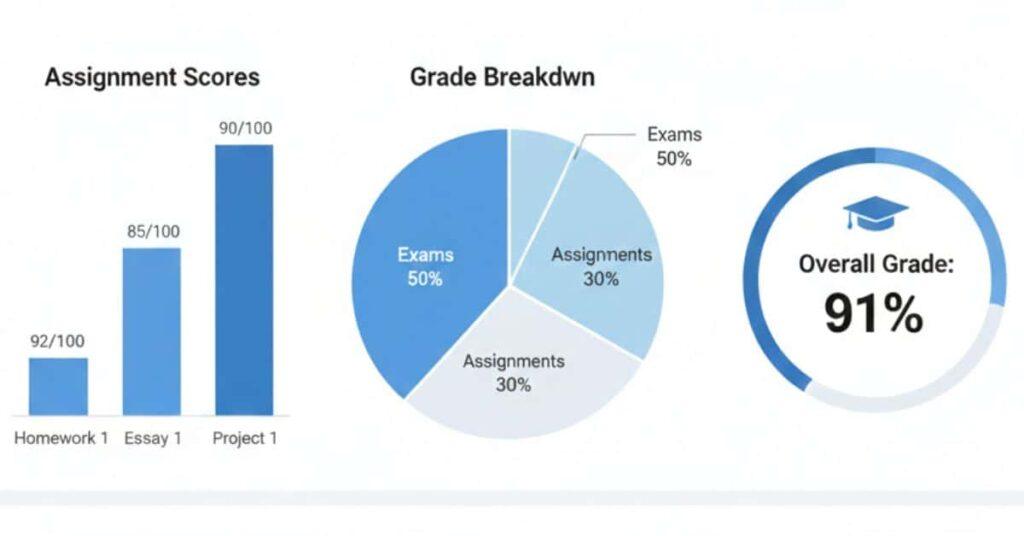
Tip: Use this section to introduce your calculators with a simple visual. For example:
How to Use Weighted Score Calculators
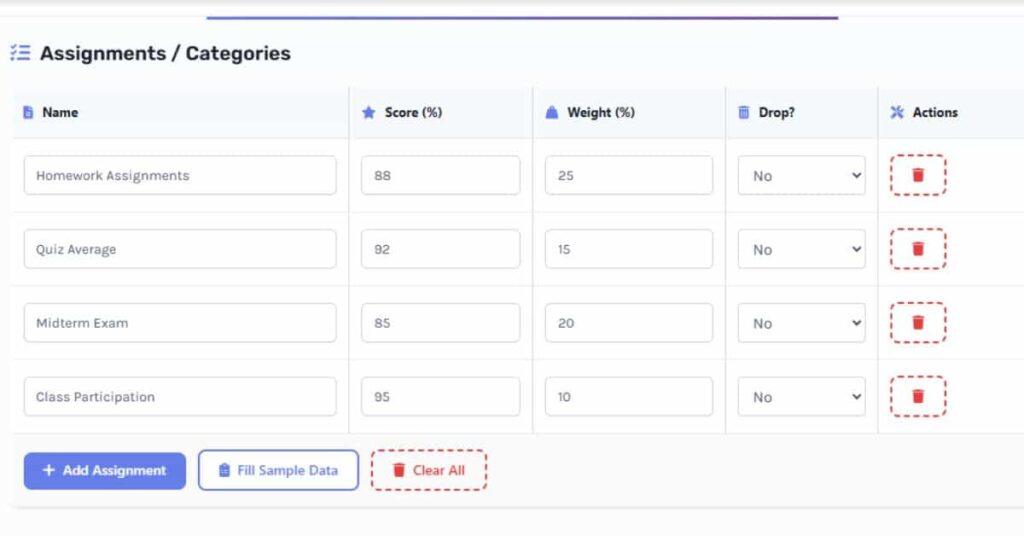
Tracking your grades in Canvas can feel tricky, especially when assignments have different weights. That’s where a Canvas weighted score calculator comes in. It makes calculating your current grade and predicting outcomes fast and easy.
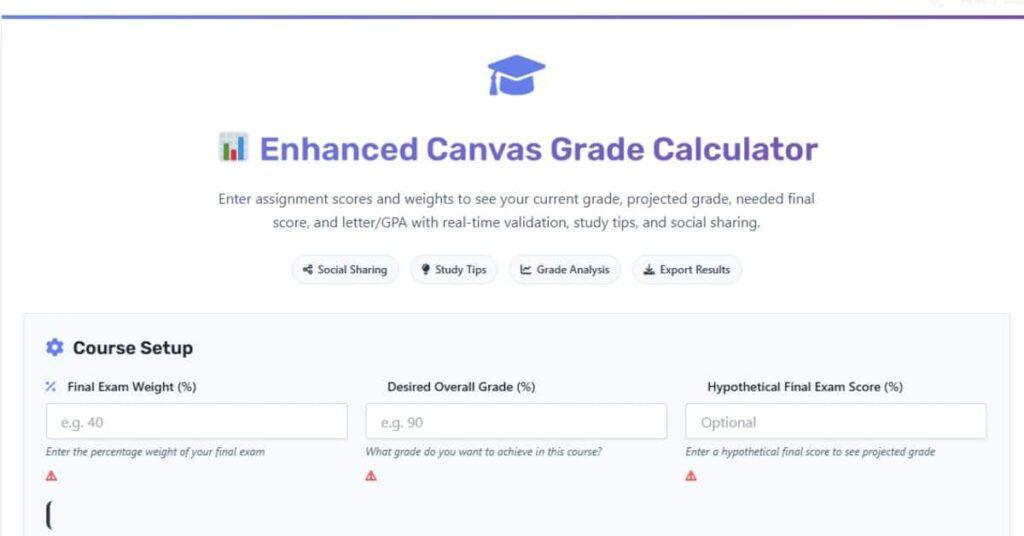
Step 1: Enter Assignment Scores and Weights
List all your assignments and quizzes. Add each score and the percentage it contributes to your total grade. For example:
-
- Homework – 25%
-
- Quizzes – 15%
-
- Midterm – 20%
-
- Participation – 10%
Step 2: Add Your Final Exam Weight
Enter the percentage weight of your final exam. This helps the calculator show how much the final can change your grade.
Step 3: Set Your Desired Overall Grade
Type in the grade you want to achieve for the course. The calculator instantly tells you what score you need on your final to reach it.
Step 4: Optional – Test Hypothetical Scores
Some calculators let you enter a hypothetical final exam score. This shows your projected grade before the exam so that you can plan your study strategy.
Key Features of a Weighted Score Calculator
-
 Real-time grade calculation
-
- Predicts needed score on final exam
-
- Shows letter grade and GPA
-
- Option to drop the lowest assignment
-
- Share, print, or export results
Pro Tip: Always double-check that your total weights add up to 100%. Most calculators will warn you if they don’t.
Predicting GPA with Canvas Calculators
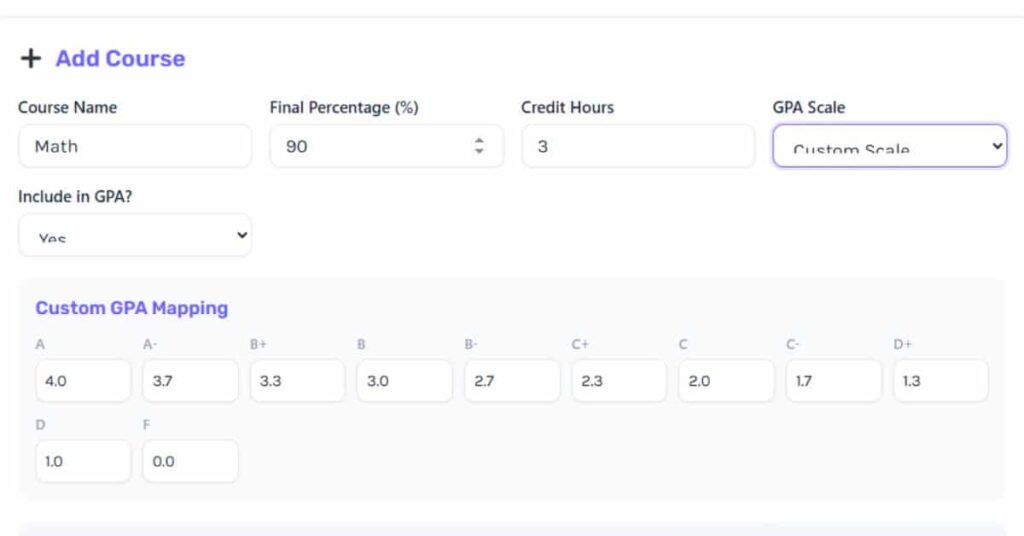
Understanding your GPA can feel confusing if you only track percentages. That’s where the Canvas GPA Calculator helps. It converts your Canvas course percentages into a clear GPA, so you know precisely how each class affects your overall performance.
Step 1: Add Your Courses
Enter each course name, final percentage, and credit hours. You can include all courses that count toward your GPA.
Step 2: Select Your GPA Scale
Choose a standard scale (like 4.0) or create a custom GPA scale to match your school’s grading system. The calculator automatically converts percentages to letter grades and GPA points.
Step 3: Use the “What-If” Simulation
The What-If feature lets you test hypothetical scores. For example, you can see how scoring 85% in your next class changes your cumulative GPA. This helps you plan study time and set realistic goals.
Key Features of a Canvas GPA Calculator
-
- Converts percentages to letter grades and GPA points
-
- Calculates cumulative GPA across multiple courses
-
- What-If simulation for planning future grades
-
- Export or print your GPA results
-
- Track progress without logging into Canvas
Pro Tip: Use this calculator after your weighted grades are entered. It gives a clear picture of your academic standing without manually converting percentages to GPA.
Letter Grade & Percentage Conversion
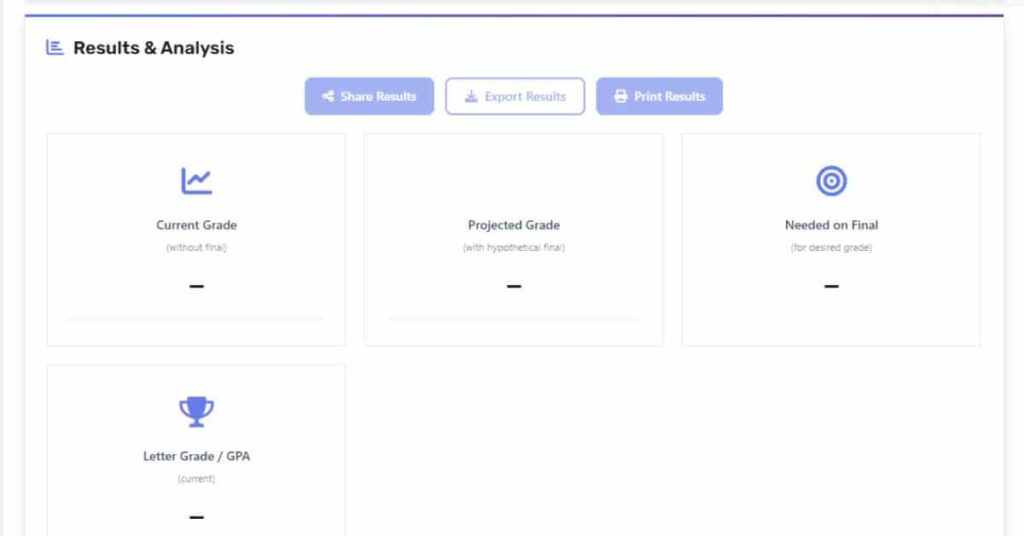
Many Canvas users see percentages but think in letter grades. A Canvas letter grade calculator bridges that gap by converting scores like 90% to an A or 85% to a B automatically.
Most schools follow a standard grading scale. While exact cutoffs can vary, common ranges look like this:
-
- 90–100% → A
-
- 80–89% → B
-
- 70–79% → C
-
- 60–69% → D
-
- Below 60% → F
Instead of converting these numbers manually, a Canvas weighted grade calculator handles the conversion for you. As soon as you enter assignment scores and weights, the calculator shows your percentage, letter grade, and GPA together.
This automatic conversion helps you:
-
- Quickly understand where you stand
-
- Avoid grading mistakes
-
- Focus on improving weak areas
Pro Tip: If your institution uses a custom grading scale, always confirm the cutoffs in your course syllabus before finalizing results.
Assignment-Specific and Cumulative Grade Calculators
Not all grades affect your course the same way. An assignment-specific grade calculator helps you see how one quiz, homework, or exam impacts your overall score. This is especially useful when a single assignment carries a high weight.
With a Canvas assignment grade calculator, you can:
-
- Test how a low or high score changes your course grade
-
- Understand which assignments matter most
-
- Decide where to focus your study time
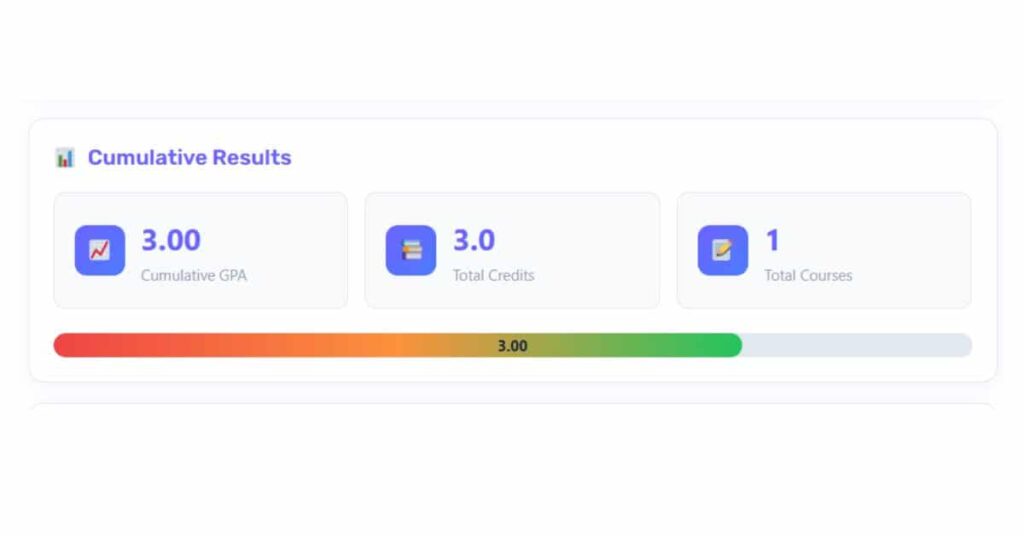
At the same time, a Canvas cumulative grade calculator shows your overall course average. It combines all assignments, categories, and weights into one clear result. This gives you a complete picture of your progress, not just isolated scores.
Drop the Lowest Assignment (When Allowed)
Some courses allow dropping the lowest score in a category, such as quizzes or homework. When enabled, this feature:
-
- Removes your weakest assignment
-
- Recalculates your average automatically
-
- Shows how much your grade can improve
This saves time and prevents manual errors. You instantly see the best-case and current scenarios without re-entering data.
Pro Tip: Use assignment-level checks early in the term. Minor improvements can have a significant impact on your final grade.
Tips for Teachers and Students Using Specialised Calculators

Specialised Canvas calculators are helpful for both students and teachers. When used correctly, they improve clarity, reduce confusion, and support better academic decisions. Below are practical tips for each group.
Tips for Students
Use grade calculators as a planning tool, not just a score checker. Enter your assignments early and update them often. This helps you see how small changes affect your final result.
-
- Check your grade before major exams to set realistic goals
-
- Use GPA calculators to track long-term progress
-
- Run “What-If” scenarios to plan study time efficiently
-
- Focus effort on high-weight assignments first
Pro Tip: Always compare calculator results with your Canvas syllabus to avoid surprises.
Tips for Teachers
Teachers can use these calculators to improve grade transparency. Precise weighting and consistent grading help students understand expectations.
-
- Share grading weights clearly at the start of the course
-
- Encourage students to use calculators for self-assessment
-
- Reduce grade-related questions by explaining how scores are calculated
-
- Support fair grading by aligning assignments with learning goals
Pro Tip: When students understand how grades work, they engage more and plan better.
Conclusion
In this guide, we covered how specialized Canvas calculators simplify grades, GPA tracking, and letter grade conversion. You learned when to use each tool and how they support smarter planning.
A canvas weighted score calculator helps you understand how assignments, exams, and weights shape your final result. Instead of guessing, you can see clear outcomes and plan with confidence. Tools like a Canvas grade predictor or a Canvas cumulative grade calculator also make it easier to track progress across a course.
For beginners in the U.S., these calculators remove confusion and save time. They turn raw percentages into meaningful insights you can act on right away. With the right approach, checking grades becomes less stressful and more accurate.
Ready to take control of your grades? Try the calculators on this page and see your results instantly. If this guide helped you, share it with a classmate or leave a comment with your experience. You can also explore more grading tools and resources on our site.

We are the Canvas Academic Team, a developer team focused on building simple and practical tools that help students succeed academically. This platform was created specifically for Canvas LMS students to make grade tracking, GPA calculations, exam planning, and academic management easier and more efficient.
Our focus is on creating fast, accurate, and student-friendly educational tools along with helpful learning resources that improve productivity and reduce academic stress.
Through CanvasGradeCalculator.com, our goal is to continue building useful resources that help students study smarter, stay organized, and achieve better academic results.